|
151 |
Suppose p(x) = 
If  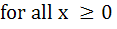 prove that prove that

|
IIT 2000 |
05:19 min
|
|
152 |
The sum of the first 2n terms of the Arithmetic Progression 2, 5, 8, . . . . is equal to the sum of the first n terms of the Arithmetic Progression 57, 59, 61, . . . . then n equals a) 100 b) 12 c) 11 d) 13
The sum of the first 2n terms of the Arithmetic Progression 2, 5, 8, . . . . is equal to the sum of the first n terms of the Arithmetic Progression 57, 59, 61, . . . . then n equals a) 100 b) 12 c) 11 d) 13
|
IIT 2001 |
01:42 min
|
|
153 |
Show that 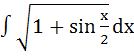 = = 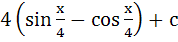
Show that =
|
IIT 1980 |
01:51 min
|
|
154 |
Seven white balls and three black balls are randomly placed in a row. The possibility that no two black balls are placed adjacently equals a)  b)  c)  d) 
Seven white balls and three black balls are randomly placed in a row. The possibility that no two black balls are placed adjacently equals a) b) c) d)
|
IIT 1998 |
03:25 min
|
|
155 |
 where a, b ε R then find the value of a for which equation has unequal roots for all values of b. where a, b ε R then find the value of a for which equation has unequal roots for all values of b.
where a, b ε R then find the value of a for which equation has unequal roots for all values of b.
|
IIT 2003 |
02:36 min
|
|
156 |
If α, β are roots of  and and  are in Geometric Progression and are in Geometric Progression and  then then a)  b)  c)  d) 
If α, β are roots of and are in Geometric Progression and then a) b) c) d)
|
IIT 2005 |
02:38 min
|
|
157 |
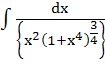 = =
a) 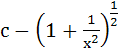 b) 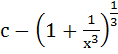 c) 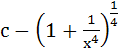 d) 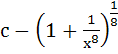
|
IIT 1984 |
02:26 min
|
|
158 |
A fair coin is tossed repeatedly. If the tail appears on first four times, then the probability of the head appearing on in the fifth toss equals a)  b)  c)  d) 
A fair coin is tossed repeatedly. If the tail appears on first four times, then the probability of the head appearing on in the fifth toss equals a) b) c) d)
|
IIT 1998 |
00:47 min
|
|
159 |
If x and y are positive real numbers and m and n are any positive integers then 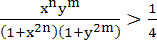
a) True b) False
If x and y are positive real numbers and m and n are any positive integers then a) True b) False
|
IIT 1989 |
02:49 min
|
|
160 |
If x, y, z are in Harmonic Progression then show that

If x, y, z are in Harmonic Progression then show that
|
IIT 1978 |
02:51 min
|
|
161 |
 = =
a) 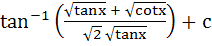 b) 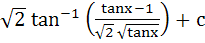 c) 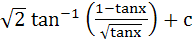 d) 
|
IIT 1989 |
04:05 min
|
|
162 |
The points with position vectors  are collinear if are collinear if a)  b)  c)  d) 
The points with position vectors are collinear if a) b) c) d)
|
IIT 1983 |
03:14 min
|
|
163 |
If P (B) = 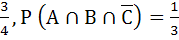 and and 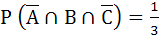 then then P (B ∩ C) is a)  b)  c)  d) 
If P (B) = and then P (B ∩ C) is a) b) c) d)
|
IIT 2004 |
02:56 min
|
|
164 |
Fill in the blank The solution of the equation
 is ………….. is …………..
Fill in the blank The solution of the equation
is …………..
|
IIT 1986 |
02:04 min
|
|
165 |
If  are in Arithmetic Progression where are in Arithmetic Progression where  for all i, show that for all i, show that

|
IIT 1982 |
04:29 min
|
|
166 |
Show that
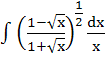 = = 
Show that
=
|
IIT 1997 |
04:06 min
|
|
167 |
Let a, b, c be three non co–planar vectors and p, q, r are vectors defined by the relations

Then the value of the expression
 is equal to is equal to a) 0 b) 1 c) 2 d) 3
Let a, b, c be three non co–planar vectors and p, q, r are vectors defined by the relations
Then the value of the expression
is equal to a) 0 b) 1 c) 2 d) 3
|
IIT 1988 |
05:35 min
|
|
168 |
Fill in the blank If x < 0, y < 0, 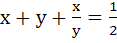 and and 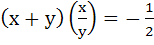 then x then x  ……….. and y ……….. ……….. and y ………..
|
IIT 1990 |
04:06 min
|
|
169 |
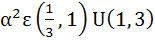
The sum of the squares of three distinct real numbers which are in Geometric Progression is  . If their sum is . If their sum is  , show that , show that
|
IIT 1986 |
06:02 min
|
|
170 |
Show that  = = 
Show that =
|
IIT 1990 |
07:54 min
|
|
171 |
Let  If d is a unit vector such that If d is a unit vector such that  then d equals then d equals a)  b)  c)  d) 
Let If d is a unit vector such that then d equals a) b) c) d)
|
IIT 1995 |
04:16 min
|
|
172 |
(One or more correct answers)
Let E and F are two independent events. The probability that both E and F happen is  and the probability that neither E nor F happens is and the probability that neither E nor F happens is  , then , then a) 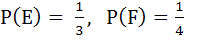 b) 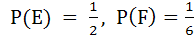 c) 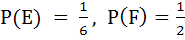 d) 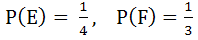
(One or more correct answers)
Let E and F are two independent events. The probability that both E and F happen is and the probability that neither E nor F happens is , then a) b) c) d)
|
IIT 1993 |
04:01 min
|
|
173 |
If  then x lies in the interval then x lies in the interval a) (2, ∞) b) (1, 2) c) (−2, −1) d) None of these
If then x lies in the interval a) (2, ∞) b) (1, 2) c) (−2, −1) d) None of these
|
IIT 1985 |
03:00 min
|
|
174 |
If a  are linearly dependent and |c| are linearly dependent and |c| then then a) 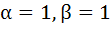 b) 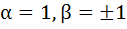 c) 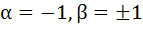 d) 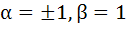
If a are linearly dependent and |c| then a) b) c) d)
|
IIT 1998 |
04:11 min
|
|
175 |
Six boys and six girls sit in a row at random. Find the probability that the girls and the boys sit alternately.
Six boys and six girls sit in a row at random. Find the probability that the girls and the boys sit alternately.
|
IIT 1978 |
05:30 min
|