|
1051 |
Using mathematical induction, prove that  for n > 1 for n > 1
Using mathematical induction, prove that for n > 1
|
IIT 1986 |
|
|
1052 |
If f(x) =  then on the interval [0, π] then on the interval [0, π] a) tan  and and  are both continuous are both continuous b) tan and are both discontinuous c) tan and  are both continuous are both continuous d) tan is continuous but is not
|
IIT 1989 |
|
|
1053 |
One or more than one correct option A ray of light along gets reflected upon reaching X- axis, the equation of the reflected ray is a) b) c) d)
One or more than one correct option A ray of light along gets reflected upon reaching X- axis, the equation of the reflected ray is a) b) c) d)
|
IIT 2013 |
|
|
1054 |
If  and and  where 0 < x ≤1, then in this interval where 0 < x ≤1, then in this interval a) Both f (x) and g (x) are increasing functions b) Both f (x) and g (x) are decreasing functions c) f (x) is an increasing function d) g (x) is an increasing function
If and where 0 < x ≤1, then in this interval a) Both f (x) and g (x) are increasing functions b) Both f (x) and g (x) are decreasing functions c) f (x) is an increasing function d) g (x) is an increasing function
|
IIT 1997 |
|
|
1055 |
The number of common tangents to the circles x2 + y2 – 4x − 6y – 12 = 0 and x2 + y2 + 6x + 18y + 26 = 0 is a) 1 b) 2 c) 3 d) 4
The number of common tangents to the circles x2 + y2 – 4x − 6y – 12 = 0 and x2 + y2 + 6x + 18y + 26 = 0 is a) 1 b) 2 c) 3 d) 4
|
IIT 2015 |
|
|
1056 |
Let p ≥ 3 be an integer and α, β be the roots of x2 – (p + 1) x + 1 = 0. Using mathematical induction show that αn + βn
i) is an integer
ii) and is not divisible by p.
Let p ≥ 3 be an integer and α, β be the roots of x2 – (p + 1) x + 1 = 0. Using mathematical induction show that αn + βn
i) is an integer
ii) and is not divisible by p.
|
IIT 1992 |
|
|
1057 |
The function  is not differentiable at is not differentiable at a) – 1 b) 0 c) 1 d) 2
The function is not differentiable at a) – 1 b) 0 c) 1 d) 2
|
IIT 1999 |
|
|
1058 |
One or more than one correct option Let RS be a diameter of the circle x2 + y2 = 1 where S is the point (1, 0). Let P be a variable point (other than R and S) on the circle and the tangents to the circle at S and P meet at the point Q. The normal to the circle at P intersect a line drawn through Q parallel to RS at a point E. Then the locus of E passes through the point(s) a) b) c) d)
One or more than one correct option Let RS be a diameter of the circle x2 + y2 = 1 where S is the point (1, 0). Let P be a variable point (other than R and S) on the circle and the tangents to the circle at S and P meet at the point Q. The normal to the circle at P intersect a line drawn through Q parallel to RS at a point E. Then the locus of E passes through the point(s) a) b) c) d)
|
IIT 2016 |
|
|
1059 |
If x is not an integral multiple of 2π use mathematical induction to prove that

If x is not an integral multiple of 2π use mathematical induction to prove that
|
IIT 1994 |
|
|
1060 |
A circle passing through (1, −2) and touching the axis of X at (3, 0) also passes through the point a) (−5, 2) b) (2, −5) c) (5, −2) d) (−2, 5)
A circle passing through (1, −2) and touching the axis of X at (3, 0) also passes through the point a) (−5, 2) b) (2, −5) c) (5, −2) d) (−2, 5)
|
IIT 2013 |
|
|
1061 |
The circles  and and 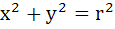 intersect each other in distinct points if intersect each other in distinct points if a) r < 2 b) r > 8 c) 2 < r < 8 d) 2 ≤ r ≤ 8
The circles and intersect each other in distinct points if a) r < 2 b) r > 8 c) 2 < r < 8 d) 2 ≤ r ≤ 8
|
IIT 1994 |
|
|
1062 |
Prove by induction that
Pn = Aαn + Bβn for all n ≥ 1
Where α and β are roots of the quadratic equation
x2 – (1 – P) x – P (1 – P) = 0,
P1 = 1, P2 = 1 – P2, . . .,
Pn = (1 – P) Pn – 1 + P (1 – P) Pn – 2  n ≥ 3, n ≥ 3,
and 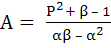 , , 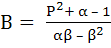
|
IIT 2000 |
|
|
1063 |
Let P be a point on the parabola y2 = 8x which is at a minimum distance from the centre C of the circle x2 + (y + 6)2 = 1. Then the equation of the circle passing through C and having its centre at P is a) x2 + y2 – 4x + 8y + 12 = 0 b) x2 + y2 –x + 4y − 12 = 0 c) x2 + y2 –x + 2y − 24 = 0 d) x2 + y2 – 4x + 9y + 18 = 0
Let P be a point on the parabola y2 = 8x which is at a minimum distance from the centre C of the circle x2 + (y + 6)2 = 1. Then the equation of the circle passing through C and having its centre at P is a) x2 + y2 – 4x + 8y + 12 = 0 b) x2 + y2 –x + 4y − 12 = 0 c) x2 + y2 –x + 2y − 24 = 0 d) x2 + y2 – 4x + 9y + 18 = 0
|
IIT 2016 |
|
|
1064 |
Let 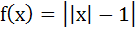 then points where f (x) is not differentiable is (are) then points where f (x) is not differentiable is (are) a) 0 b) 1 c) ± 1 d) 0, ± 1
Let then points where f (x) is not differentiable is (are) a) 0 b) 1 c) ± 1 d) 0, ± 1
|
IIT 2005 |
|
|
1065 |
The slope of the line touching both parabolas y2 = 4x and x2 = −32y is a) b) c) d)
The slope of the line touching both parabolas y2 = 4x and x2 = −32y is a) b) c) d)
|
IIT 2014 |
|
|
1066 |
Let PQ and RS be tangents at the extremities of the diameter PR of a circle of radius r. If PS and QR intersect at a point x on the circumference of the circle, then 2r equals a)  b)  c)  d) 
Let PQ and RS be tangents at the extremities of the diameter PR of a circle of radius r. If PS and QR intersect at a point x on the circumference of the circle, then 2r equals a) b) c) d)
|
IIT 2001 |
|
|
1067 |
Multiple choices Let [x] denote the greatest integer less than or equal to x. If f (x) = [xsinπx] then f(x) is a) Continuous at x = 0 b) Continuous in  c) f (x) is differentiable at x = 1 d) differentiable in  e) None of these
Multiple choices Let [x] denote the greatest integer less than or equal to x. If f (x) = [xsinπx] then f(x) is a) Continuous at x = 0 b) Continuous in c) f (x) is differentiable at x = 1 d) differentiable in e) None of these
|
IIT 1986 |
|
|
1068 |
Let  then then 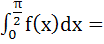 a)  b)  c)  d) 
|
IIT 1987 |
|
|
1069 |
Let a, r, s, t be non-zero real numbers. Let P(at2, 2at), Q, R(ar2, 2ar and S(as2, 2as) be distinct points on the parabola y2 = 4ax. Suppose PQ is the focal chord and QR and PK are parallel, where K is point (2a, 0) The value of r is a) b) c) d)
Let a, r, s, t be non-zero real numbers. Let P(at2, 2at), Q, R(ar2, 2ar and S(as2, 2as) be distinct points on the parabola y2 = 4ax. Suppose PQ is the focal chord and QR and PK are parallel, where K is point (2a, 0) The value of r is a) b) c) d)
|
IIT 2014 |
|
|
1070 |
Find all solutions of  a)  b)  c)  d) 
Find all solutions of a) b) c) d)
|
IIT 1983 |
|
|
1071 |
Multiple choices Which of the following functions are continuous on (0, π) a) tanx b)  c) 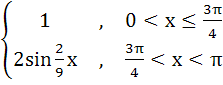 d) 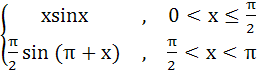
Multiple choices Which of the following functions are continuous on (0, π) a) tanx b) c) d)
|
IIT 1991 |
|
|
1072 |
One or more than one correct option If the normals of the parabola y2 = 4x drawn at the end points of the latus rectum are tangents to the circle (x − 3)2 + (y + 2)2 = r2 then the value of r2 is a) 4 b) 1 c) 2 d) 0
One or more than one correct option If the normals of the parabola y2 = 4x drawn at the end points of the latus rectum are tangents to the circle (x − 3)2 + (y + 2)2 = r2 then the value of r2 is a) 4 b) 1 c) 2 d) 0
|
IIT 2015 |
|
|
1073 |
Multiple choices Let  for every real number x then for every real number x then a) h (x) is continuous for all x b) h is differentiable for all x c)  for all x > 1 for all x > 1 d) h is not differentiable for two values of x
Multiple choices Let for every real number x then a) h (x) is continuous for all x b) h is differentiable for all x c) for all x > 1 d) h is not differentiable for two values of x
|
IIT 1998 |
|
|
1074 |
Number of divisors of the form 4n + 2(n ≥ 0) of integer 240 is a) 4 b) 8 c) 10 d) 3
Number of divisors of the form 4n + 2(n ≥ 0) of integer 240 is a) 4 b) 8 c) 10 d) 3
|
IIT 1998 |
|
|
1075 |
The smallest positive root of the equation tan x – x = 0 lies in a)  b)  c)  d)  e) None of these
The smallest positive root of the equation tan x – x = 0 lies in a) b) c) d) e) None of these
|
IIT 1987 |
|